Håkan’s infected, reanimated state
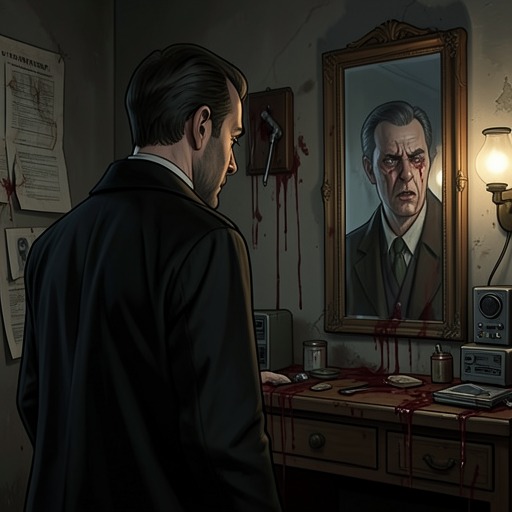
Let the Right One InHåkan’s infected, reanimated state turns the apparent survival of a person into something governed by the infection instead: Oskar understands that Håkan’s brain is dead and that the infection is the only living thing in him, directing him toward Eli. The condition makes Håkan’s return a continuing threat, while drawing Oskar into responsibility for Eli’s vulnerability.
Infection and Its Consequences
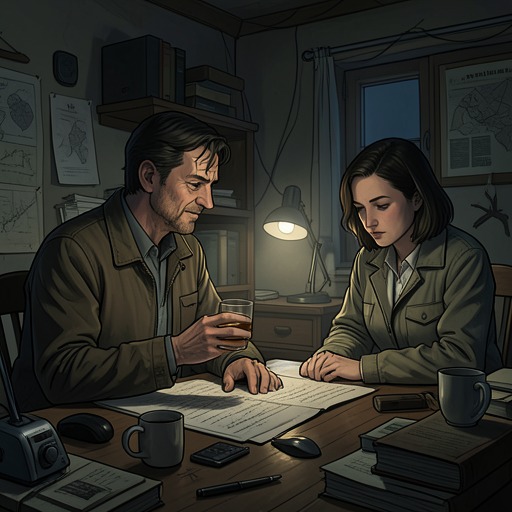
After Eli leaves, Oskar reviews the newspaper articles at the kitchen table. The impressions he has received are beginning to form a pattern, and Eli’s explanation gives him a way to understand the old man: Håkan has become infected, and the infection—not Håkan’s brain—is alive and controlling his body. Its direction is toward Eli. Oskar also understands that Eli cannot simply leave at once; she plans to go the following day, after dark. When he asks why she cannot leave that night, the explanation does not settle the immediate danger. Instead, Oskar recognizes his own part in Eli’s weakness: the blood lost in the hall has left her vulnerable. He fears that if Håkan reaches her, the outcome will be his fault. His abrupt realization shifts the infection from a frightening account of what has happened to a present danger for which Oskar feels responsible.
Return and Resistance
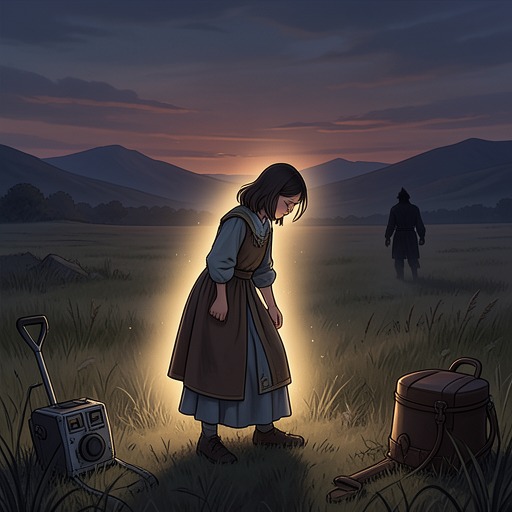
When Eli meets Håkan again, the infected body has returned to the doorway, and its ruined appearance makes clear that this is no ordinary recovery. Its movement and speech are impaired, but it remains directed toward Eli. Eli does not know whether the reanimated creature is bound by the same limits as a vampire, or whether destroying its heart would stop it. Håkan’s pause at the threshold suggests that it may still need an invitation to enter, but Eli treats this as a possibility, not a certainty. The encounter also brings back a fear Eli had nearly forgotten: fear of pain, despite the knowledge that injuries heal.
Eli attacks Håkan’s heart in an attempt to end the threat. The heart feels cold and inactive, yet Eli destroys it; the effort does not stop Håkan from moving again and continuing toward Eli. Blind and without a functioning heart, Håkan still pursues, leaving Eli to conclude that the creature must be destroyed by some other means. The episode defines the state through its resistance to ordinary expectations of bodily death: even removing the apparent center of life does not release Eli from pursuit. Later, when Staffan finds Tommy beside Håkan’s remains, he thinks he may be hallucinating as the body seems to move between Tommy’s blows. The uncertain observation leaves the creature’s persistence unsettlingly unresolved.
Recognition Without Recovery
The return is first experienced as a threat pressing against a boundary: Tommy waits behind the door, trying not to cry out, while Håkan’s presence blocks the way beyond it. When Håkan makes a sound that might be an attempt to say Eli’s name, the exchange briefly retains the shape of recognition. Eli answers him, but the moment offers no proof that Håkan’s former self has returned; his speech remains damaged and his approach remains dangerous. The name survives where reliable communication does not, leaving Eli to confront a familiar person whose body is now directed by something else.
Tommy and the Unsettled Aftermath
When Staffan opens the door, he finds Tommy beside Håkan’s remains, repeating a counting song as he strikes them with a square stone. The count has reached 277 elephants on the spiderweb. Tommy’s fixed, repetitive action gives the aftermath a different register from Eli’s earlier attempt to stop Håkan: here, the threat is met not with an explanation of infection or a test of its limits, but with a child’s relentless counting and blows. Staffan is so shaken by what he sees that he thinks he may be hallucinating; between strikes, the remains seem to move as if trying to rise. The perception is uncertain, but it leaves Håkan’s reanimated state without a cleanly confirmed endpoint.